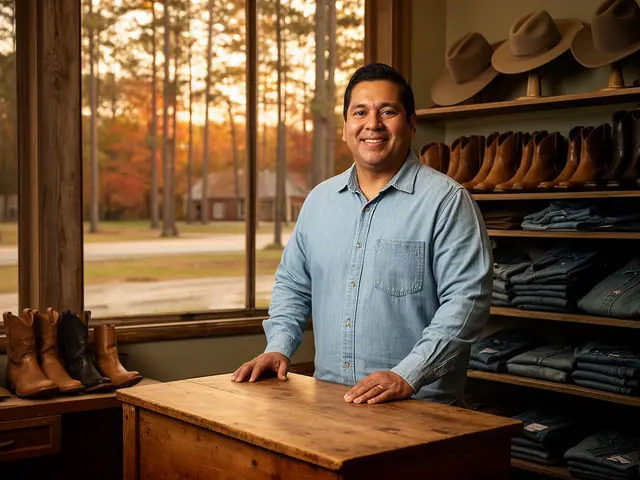
A Texarkana, AR shop can fund holiday stock with money that is paid down as the goods sell: an inventory loan sized to the order, a line of credit drawn for it, or vendor terms that push the bill past the selling weeks. Paying for the whole order out of the register can leave rent and payroll short just before the busiest stretch.
An article from Mesashore Finance in Texarkana, Arkansas on paying for holiday and seasonal stock, with Miller County, AR store counts, an invented gift shop order paid down month by month and a checklist before placing a large order.
Retail Store Financing for Stock Bought Months Before It Sells
A shop orders holiday goods months before shoppers buy them, and vendors want payment on their terms, often 30 or 60 days after shipment. If the goods are still on the shelf when the bill comes due, the shop pays from cash it needs for rent, payroll and the next order.
- Inventory financing: a loan sized to the order, often secured by the goods, paid down as they sell.
- Line of credit: drawn to pay the vendor, paid down from sales, and ready for the next order.
- Vendor terms: longer payment dates negotiated with the supplier, sometimes called dating.
- Working capital loan: a fixed sum for the order and the extra staff hours around it.
Retail Business Financing for Fixtures and Storefront Upgrades in Texarkana, AR
Holiday seasons are also when shops update fixtures: a new display wall, lighting for the windows, a second register or a remodel of the front of the store. Those are long-lived purchases and fit a term loan or equipment financing, not the money used for stock.
Keeping the two apart matters. Fixtures financed over several years match how long they last; stock financed over several years would still be owed long after it sold.
An Invented Gift Shop Order, Paid Down as It Sells
Illustration only, invented figures: a gift shop places a $30,000 holiday order and finances it with an inventory loan at an invented annual rate of 13%, paying the loan down by the share of the order sold each month. All results are our arithmetic.
| Month | Share of order sold | Paid down | Interest that month | Balance after paydown |
|---|---|---|---|---|
| Month 1 | 20% | $6,000 | $325.00 | $24,000 |
| Month 2 | 35% | $10,500 | $260.00 | $13,500 |
| Month 3 | 30% | $9,000 | $146.25 | $4,500 |
| Month 4 | 15% | $4,500 | $48.75 | $0 |
In this invented case, interest over the four months comes to about $780 (our arithmetic). If a quarter of the order were still unsold at the end, the shop would owe that balance on the loan's terms whether or not the goods sell later, which is why a realistic order size matters more than the financing.
Paperwork a Shop Gathers Before Asking for a Retail Store Loan
- Last year's sales by month and how much of last year's holiday order sold at full price.
- This year's purchase orders, with vendor terms and ship dates.
- Recent business bank and card-processing statements.
- The latest business tax return.
- A list of what the store already owes each month.
A partner reads those to judge whether the order is in line with past sales and whether the store can carry it if sales come in below plan.
Retail Store Loans and the Miller County, AR Store Count
No sector in Miller County, AR had more employer establishments in 2023 than retail trade: 110 stores and dealers, employing 1,158 people on a $35.8 million payroll (County Business Patterns). Exactly 55 of those 110 had fewer than five employees. Store types included 16 gasoline stations, 15 all other general merchandise stores, 11 automotive parts, accessories and tire stores and 4 clothing and clothing accessories stores.
Shops run without employees appear in another Census series, Nonemployer Statistics, which listed 285 retail businesses of that kind in Miller County, AR for 2024. Business loans for retail covers fixtures, remodels and store buildings, and the Texarkana, AR business page adds ZIP 71854 counts.
Vendor Terms Before Borrowed Money
Before borrowing for holiday stock, ask about the vendor's own terms. Some suppliers will ship early and bill later, or split a large order into several shipments and invoices. Ask before borrowing; a longer payment date from the vendor can shrink the amount a shop needs to finance, or remove the need altogether.
Where vendor terms fall short, financing fills the gap between the vendor's due date and the weeks the goods sell. Size it to that gap, not to the full order.
A Shop Owner's Checklist Before Placing a Large Order
- Size the order to last year's sell-through, not to hopes for a record season.
- Ask vendors for longer terms or split shipments.
- Match the financing's payoff to the weeks the goods sell.
- Keep fixtures and stock on separate financing.
- Plan what happens to leftover stock: markdowns, returns to vendors or carrying it forward.
By Mesashore Finance · Updated